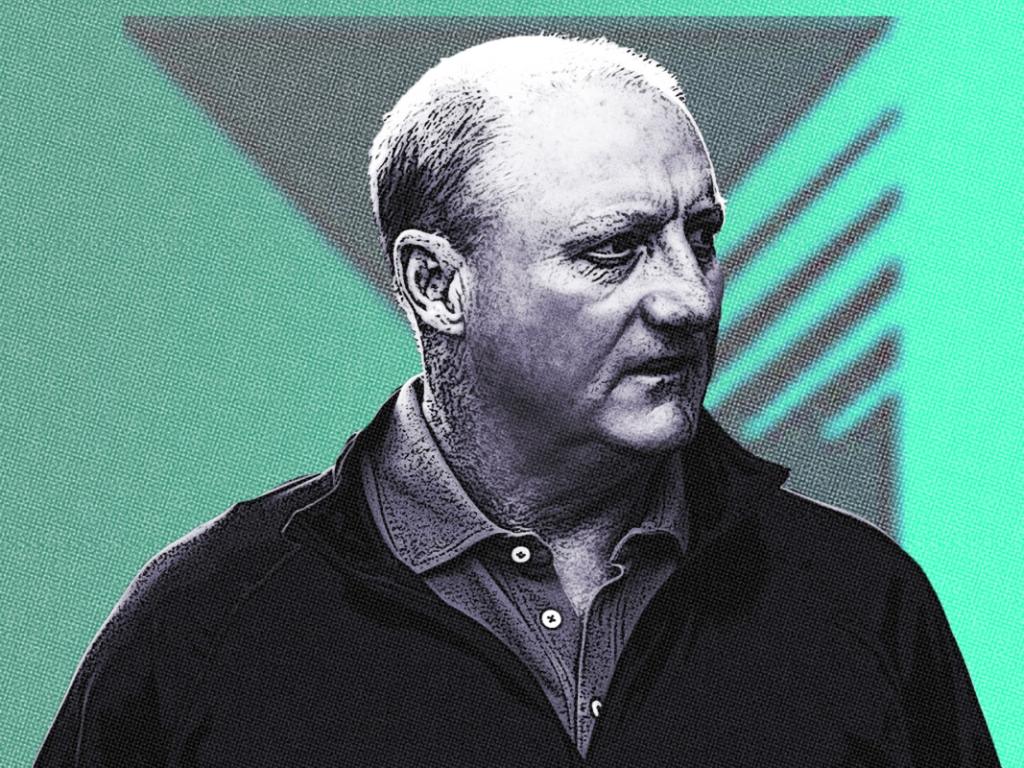
Berkshire Hathaway disclosed in a new regulatory filing that new CEO Greg Abel will receive a $25 million annual cash salary, a 19% raise from the $21 million he earned in 2024 as vice chairman. That figure “far exceed[s] the $100,000 annual salary that his predecessor Warren Buffett accepted for more than four decades,” according to Reuters.
Buffett famously kept his base pay at $100,000 a year from 1980 onward, even as Berkshire grew into a $1 trillion conglomerate with hundreds of billions in cash and investments. Buffett’s salary stayed flat, while his wealth came almost entirely from Berkshire stock, not cash compensation, Business Insider has reported.
If you’re a Berkshire shareholder, that contrast is stark: The man who built the company was paid less than many middle managers, while his successor is stepping into the top job with compensation closer to what you see across the S&P 500.
How Greg Abel’s pay compares to Buffett’s
The numbers look even bigger when you stack them up side by side. Berkshire’s new filing says Abel’s $25 million is all cash, while Buffett never took bonuses, options, or stock grants in the role.
Berkshire also raised Abel’s salary from $20 million in 2023 and $16 million (plus a $3 million bonus) in 2022 as he ran the non-insurance businesses, according to reports from Investing.com and MarketScreener.
Morris/Bloomberg via Getty/TheStreet
Abel’s new pay “far eclipses” Buffett’s $100,000 salary, Bloomberg reported, even though it is still modest for the CEO of a company Berkshire’s size and complexity.
His $25 million salary is roughly a 19% jump from 2024 and comes as the company sits on more than $380 billion in cash, according to Business Standard and Stocktwits.
More Warren Buffett:
- Warren Buffett’s Berkshire Hathaway shares mortgage warning
- Analysis: Why ‘cheap stocks to buy now’ is the wrong investing idea
Here’s how that looks in simple terms for you as a shareholder or would-be investor:
- Buffett’s share-based wealth: Buffett built a fortune worth well over $100 billion almost entirely through Berkshire stock, keeping his salary low as a signal to shareholders about pay restraint.
- Abel’s mix: Abel owns roughly $171 million in Berkshire stock and previously sold a 1% stake in Berkshire Hathaway Energy for about $870 million, according to Reuters, but his ongoing compensation will lean heavily on cash instead of new stock grants.
- Ajit Jain as reference point: Vice Chairman Ajit Jain, who runs Berkshire’s insurance operations, has received similar pay packages to Abel in recent years, with $16 million in salary and a $3 million bonus from 2022 through 2024, Yahoo Finance reported.
What changed inside Berkshire
From the outside, it looks like a sharp cultural shift, but the groundwork for the CEO salary shift was laid years ago. Berkshire’s 2025 proxy statement explains that compensation for Abel, Jain, and longtime CFO Marc Hamburg is set by a three-person compensation committee that considers the scale and complexity of their responsibilities and the economics of the businesses they oversee.
That is a change from the era when Buffett effectively set his own salary and decided what his top lieutenants earned. Abel and Jain now use “the same general criteria as had been used by Mr. Buffett” to set pay for the CEOs of Berkshire’s operating companies, including the capital intensity and long-term potential of each business, according to the company’s 2025 proxy statement.
Related: Warren Buffett’s Berkshire Hathaway predicts real estate shift
You might remember that Buffett himself laid out his philosophy on future CEO pay nearly a decade ago. At the 2017 annual meeting, he said he hoped his successor would already be rich and wouldn’t be driven to make “10 or 100 times” more than they needed, adding that it would be “terrific” if the next CEO chose a lower-than-market package to set an example.
Business Insider highlighted those comments when discussing Abel’s compensation.
Why investors should care about Berkshire CEO’s pay
If you own Berkshire, or you’re thinking about buying it, the headline number is less important than what it tells you about governance and incentives.
Executive pay is really about how well management’s interests line up with yours. In Berkshire’s case, investors long took comfort in the fact that Buffett’s wealth was tied overwhelmingly to the stock price, not a paycheck.
Here’s how Abel’s package hits your decision-making:
- Signal on culture: Abel’s new $25 million salary still trails the pay of many CEOs running smaller companies, underscoring Berkshire’s effort to balance competitive compensation with a reputation for moderation at the top, as pointed out by Reuters.
- Incentive alignment: Abel’s large preexisting stake in Berkshire, plus his BHE windfall, means he is already extremely wealthy, which can reassure you that he is not purely chasing cash. At the same time, moving to a pure-cash $25 million package means the board will need to keep explaining how that figure ties to long-term performance.
- Market context: Abel’s $25 million cash salary now sits above the roughly $17 million median pay package for S&P 500 CEOs in recent years as he takes over a much larger conglomerate, according to LinkedIn News.
For a company that has long criticized excessive executive pay elsewhere, that’s a narrative investors will watch closely. Buffett warned in earlier filings that out-of-control compensation could hurt shareholders, Bloomberg reported in a retrospective on his $100,000 salary.
What this means for you and Berkshire’s future
If you’re managing your own portfolio, the real question is whether Berkshire after Buffett still behaves like an “owner-operator” business or slowly drifts toward being a conventional conglomerate. Pay is one of the most visible tests of that.
Here is how you might think about it in practical terms:
- If you prize discipline: You may want to watch how Berkshire’s board explains any future changes to Abel’s compensation, including bonuses or equity plans, and whether they tie them clearly to long-run performance rather than yearly stock moves.
- If you’re focused on returns: You might ask yourself whether a $25 million salary is material relative to Berkshire’s earnings and cash pile. On a company generating tens of billions a year, the direct dollar impact is tiny, but the cultural signal can be big.
- If you’re comparing CEOs: It can help to look across your portfolio at how other CEOs get paid, especially in financials and conglomerates, and whether boards there are willing to go against “market” norms the way Buffett did or now seems less inclined to do.
In other words, you’re not just witnessing a pay bump. You’re watching the first real test of how Berkshire’s board plans to run the company without Buffett in the top job. For long-term investors, that’s going to matter a lot more than one year’s compensation figure.
Related: Buffett leaves, and Berkshire investors waste no time reacting